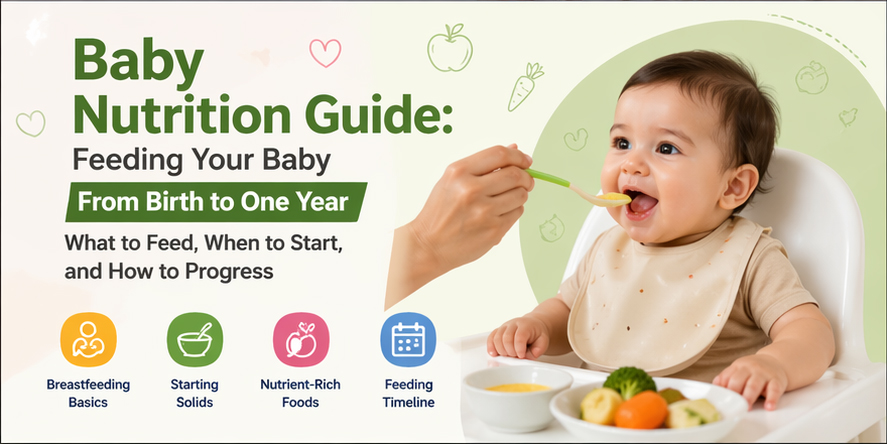
Feeding your baby is one of the most important decisions you will make in their first year of life. Good nutrition during this window shapes brain development, immunity, healthy growth, and even lifelong food preferences. If you are wondering when to start solids for your baby, what baby first foods work best, or how to make homemade baby food that is nutritious and easy — this guide is for you. We covered breastfeeding and formula feeding in our previous blog on newborn care — this baby nutrition guide picks up from six months onwards, when your baby is ready for the exciting world of complementary feeding.
When to Start Solids:
The Six Month Mark Both the Indian Academy of Pediatrics and the World Health Organization recommend starting complementary feeding at exactly six months of age — not before. Before six months, your baby's gut is not mature enough to handle solid foods, and breast milk or formula provides complete nutrition. Starting solids too early increases the risk of digestive problems, allergies, and obesity later in life.
Signs Your Baby is Ready to Start Solids:
Your baby can sit with minimal support and hold their head steady. They show interest in food — watching you eat, reaching for food. They have lost the tongue thrust reflex — meaning they don't automatically push food out of their mouth. They can move food to the back of their mouth and swallow.
What to Feed Your Baby at 6 Months:
Best First Foods Babies The best first foods for your baby are single ingredient pureed vegetables and fruits — simple, fresh, and homemade. Forget packaged baby food — homemade baby food is fresher, cheaper, and far more nutritious. Start with one new food every three to four days so you can identify any allergic reaction easily.
Sweet Potato Puree:
Sweet potato is one of the best first foods for Indian babies — it is naturally sweet, easy to digest, and rich in vitamin A, potassium, and fiber. Recipe: Steam or boil one small sweet potato until soft. Remove the skin and blend with a little boiled cooled water until completely smooth. Serve two to three teaspoons to start.
Carrot Puree:
Carrots are iron-rich, naturally sweet, and easy for babies to digest. Recipe: Peel and chop one medium carrot. Steam until soft and blend with a little water until smooth. You can mix carrot and sweet potato together once your baby has tried both separately.
Banana Mash:
Banana is one of the easiest first foods — no cooking required. Recipe: Mash half a ripe banana with a fork until completely smooth. Add a few drops of breast milk or formula to thin it out if needed. Banana is rich in potassium and natural sugars for quick energy.
Pumpkin Puree:
Pumpkin or kaddu is easily available across India, inexpensive, and extremely gentle on baby's stomach. Recipe: Steam or boil pumpkin pieces until soft and blend until smooth. Rich in vitamin A and antioxidants.
Apple Puree:
A classic first fruit that babies love. Recipe: Peel, core, and chop one small apple. Steam until soft and blend until completely smooth. Never give raw apple to babies under eight months as it is a choking hazard.
How Much to Feed at 6 Months:
Start with just two to three teaspoons once a day. Gradually increase to two to three tablespoons twice a day by the end of the seventh month. Breast milk or formula remains the primary nutrition source — solids are complementary at this stage, not replacement."
By seven months, your baby is ready for thicker, lumpier textures and a wider variety of foods. This is also the stage where iron-rich foods become critical — your baby's iron stores from birth begin to deplete around six months, and breast milk alone cannot meet iron needs
Moong Dal Khichdi:
Unlike dal water which has minimal nutritional value, a proper soft cooked khichdi gives your baby protein, carbohydrates, and iron together in one meal. Recipe: Cook two tablespoons of moong dal and two tablespoons of rice together with four times the water until completely soft and mushy. Add a tiny pinch of turmeric and a few drops of ghee for flavor and fat. Mash well before serving. No salt, no sugar at this stage.
Ragi Porridge:
Ragi or finger millet is a superfood for Indian babies — exceptionally rich in calcium, iron, and fiber. Recipe: Mix one tablespoon of ragi flour with half a cup of water. Cook on low flame stirring continuously for five to seven minutes until thick. You can sweeten naturally with mashed banana — never add sugar or jaggery before one year.
Egg Yolk:
Egg yolk is one of the best sources of iron, healthy fat, and choline for brain development. Recipe: Hard boil one egg, remove the white completely, and mash the yolk with a few drops of breast milk or formula until smooth. Introduce egg white only after nine months as it is a common allergen.
Spinach and Potato Mash:
Spinach is rich in iron and folate. Recipe: Boil one small potato and a handful of spinach leaves together. Drain and mash together until smooth. Add a few drops of ghee. The vitamin C in vegetables helps absorb iron better.
Mashed Banana with Yogurt:
By seven to eight months, plain full fat homemade yogurt or dahi can be introduced. Mix mashed banana with two tablespoons of dahi for a probiotic rich meal that supports gut health.
Texture Progression:
At six months, everything should be smooth puree. By seven to eight months, move to mashed and lumpy textures — this is important for jaw development and preventing fussy eating later. By nine months, soft cooked pieces are appropriate.
Feeding Frequency at 7-9 Months:
Two to three meals per day of solid food plus breast milk or formula. Offer water in a cup from six months onwards — never in a bottle."
By ten months, your baby is ready for soft finger foods and is beginning to feed themselves. This is an exciting and messy stage — embrace it. Self feeding builds independence, fine motor skills, and a healthy relationship with food. Let your baby explore textures, colors, and tastes freely.
Soft Cooked Vegetable Pieces:
Cut soft cooked carrots, pumpkin, sweet potato, or beans into small pieces the size of your fingertip. They should be soft enough to squish easily between your fingers — if you can squish it, your baby's gums can too.
Idli Pieces:
Soft idli cut into small pieces is one of the best finger foods for Indian babies — easy to hold, soft to chew, and nutritious. You can dip lightly in sambar that is not too spicy or sour.
Chapati Strips:
Soft chapati or roti with a little ghee torn into strips is perfect for self feeding. Avoid adding salt as much as possible at this stage.
Paneer Cubes:
Soft paneer is an excellent source of protein and calcium for Indian babies. Cut into small soft cubes. Lightly cook in a tiny drop of ghee if desired.
Banana Pieces:
Ripe banana cut into small pieces is a perfect finger food — naturally sweet, soft, and nutritious.
Boiled Egg Pieces:
By ten months, well cooked whole egg including the white can be offered in small soft pieces.
By twelve months, your baby can eat most of what the family eats — with some modifications. Keep salt and sugar minimal. Avoid very spicy food, honey before one year, and whole nuts which are choking hazards. Introduce cow's milk as a drink after twelve months — full fat only.
Responsive Feeding:
Never force your baby to finish a meal. Watch for hunger and fullness cues. A baby turning their head away, closing their mouth, or pushing food away is telling you they are full. Forcing feeding creates unhealthy food relationships that last into childhood."