Blogs

Blog Image

How to Care for Your Newborn at Home: A Pediatrician’s Guide — Part One

Dr. Sana Agrawal

Bringing your newborn home is exhilarating and overwhelming in equal measure. Every cry, every feeding, every tiny movement raises questions — and that’s completely normal. As a pediatrician with experience in newborn care, I’ve seen thousands of parents navigate these early weeks with anxiety and uncertainty. This guide covers the essentials you need to know to care for your newborn confidently at home, based on established pediatric guidelines and practical wisdom.

Blog Image

How to Care for Your Newborn at Home: A Pediatrician’s Guide — Part Two

Dr. Sana Agrawal

Understanding Newborn Jaundice: When to Worry and When It’s Normal What is Jaundice in Newborns: Jaundice occurs when a yellow pigment called bilirubin builds up in your baby’s blood faster than their liver can process it. About sixty percent of term newborns and eighty percent of preterm newborns develop some jaundice in the first week — it’s common but needs monitoring. It usually improves within a few days with proper feeding and medical observation when needed.

Blog Image

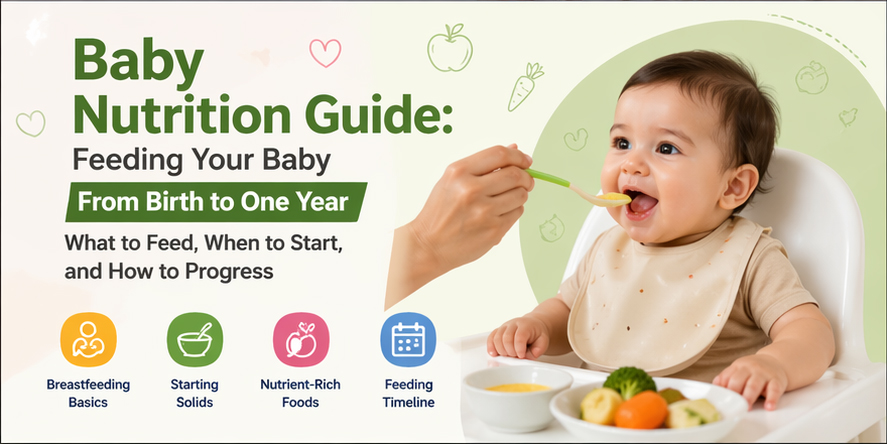
Baby Nutrition Guide: Feeding Your Baby From Birth to One Year — What to Feed, When to Start, and How to Progress

Dr. Sana Agrawal

Feeding your baby is one of the most important decisions you will make in their first year of life. Good nutrition during this window shapes brain development, immunity, healthy growth, and even lifelong food preferences. If you are wondering when to start solids for your baby, what baby first foods work best, or how to make homemade baby food that is nutritious and easy — this guide is for you. We covered breastfeeding and formula feeding in our previous blog on newborn care — this baby nutrition guide picks up from six months onwards, when your baby is ready for the exciting world of complementary feeding.


Blog Image

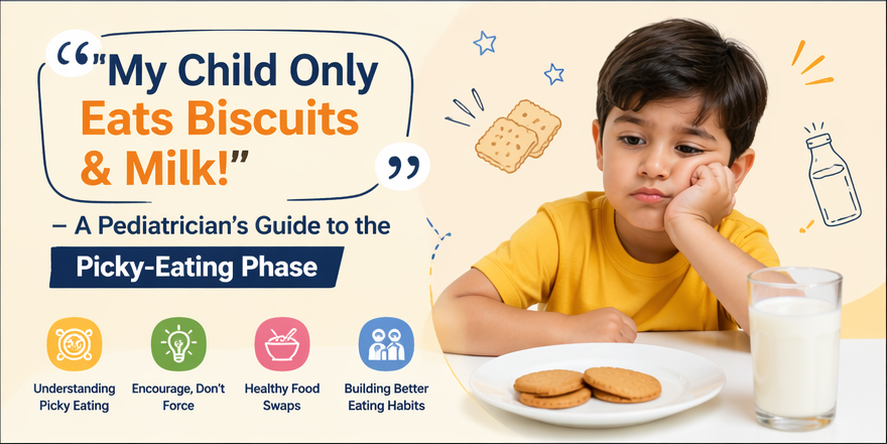
My Child Only Eats Biscuits & Milk!" – A Pediatrician’s Guide to the Picky-Eating Phase

Dr. Sana Agrawal

In many Indian households, mealtime is often the most stressful hour of the day. From chasing a toddler around the living room with a bowl of dal-chawal to the constant pressure from elders who think the baby looks "too thin," the "Food Wars" are real. As a pediatrician practicing in Mumbai, I see many urban parents struggling with this. If your child has suddenly started refusing the healthy upma or roti you’ve prepared and is demanding only "packets" or plain milk, this guide is for you. Understanding the reasons behind food refusal, setting gentle routines, and encouraging positive eating habits can gradually reduce mealtime stress and improve a child’s long-term relationship with food.